
Caring for invertebrates is rewarding, educational, and accessible for keepers at every experience level. Tarantulas, scorpions, millipedes, beetles, and other exotic species each have unique needs, but they share several core care principles that help them thrive in captivity. This guide provides a clear, practical overview of what new keepers should know before bringing home their first invertebrate. It is designed to help you build confidence, avoid common mistakes, and create a safe environment for your animals.
This is not a species specific guide. It is a foundation that applies to most commonly kept invertebrates in the United States.
Why Invertebrates Make Great Pets
Invertebrates are popular because they are low maintenance, quiet, clean, and fascinating to observe. They do not require daily handling or constant interaction. They thrive in well designed enclosures and follow predictable routines. Many species live for several years, and some tarantulas can live for decades. Their care is structured, consistent, and easy to learn when you understand the basics.
1. Understanding the Needs of Different Invertebrate Groups
Although invertebrates share general care principles, each group has its own requirements.
Tarantulas
Most tarantulas prefer secure enclosures with appropriate substrate depth, a hide, and stable humidity. Arboreal species need vertical space. Terrestrial species need floor space and limited height to prevent falls.
Scorpions
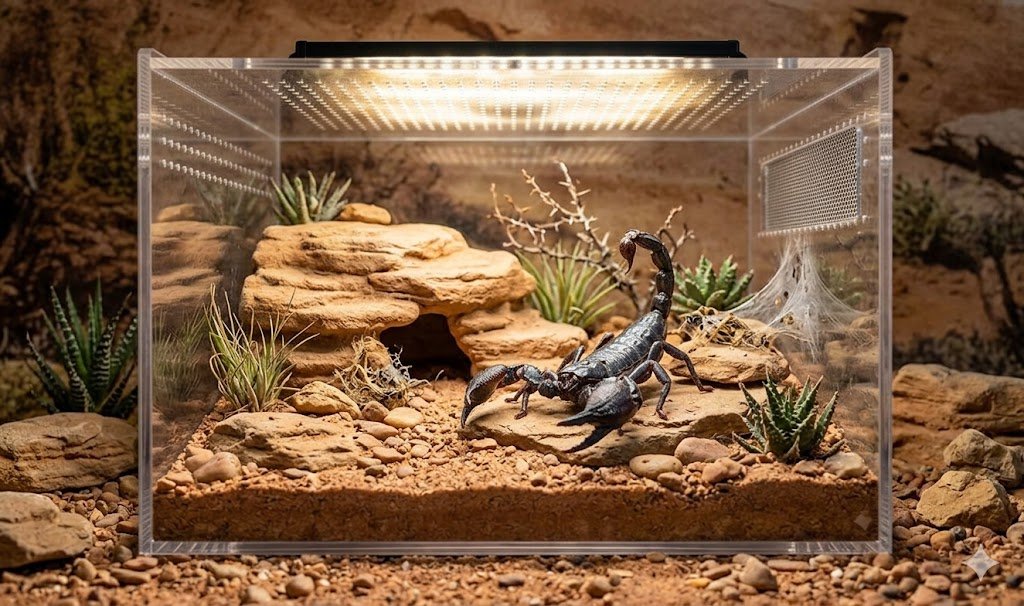
Scorpions require stable temperatures, secure hides, and substrate that matches their natural environment. Some species prefer dry conditions. Others need moderate humidity.
Millipedes
Millipedes need deep, nutrient rich substrate for burrowing and feeding. They require stable humidity and good airflow. They are sensitive to chemicals and require clean, natural materials.
Beetles
Beetle care varies by species. Many require specific substrate blends for larvae and adults. Some need rotting wood or leaf litter. Others need dry, sandy environments.
Understanding the natural history of the species helps you create a safe and appropriate habitat.
2. Choosing the Right Enclosure
The enclosure is the foundation of invertebrate care. A well designed enclosure supports natural behavior and reduces stress.
Key features to look for
- Escape proof lid
- Adequate ventilation
- Clear visibility
- Easy access for feeding
- Appropriate size for the species
Avoid enclosures that are too large. Most invertebrates prefer secure, contained spaces that allow them to feel hidden and protected.
3. Substrate and Habitat Setup
Substrate affects humidity, burrowing behavior, and overall comfort.
Common substrate types
- Coconut fiber
- Peat moss
- Soil blends
- Bioactive mixes
- Sand and clay blends for desert species
Substrate depth
Burrowing species require deeper substrate. Terrestrial tarantulas benefit from compacted substrate to prevent collapse. Millipedes need deep, nutrient rich substrate for feeding and molting.
Décor and hides
Every enclosure should include:
- A secure hide
- Natural décor such as cork bark or branches
- Leaf litter for species that require it
- A water bowl
Décor should be stable and placed in a way that prevents collapse.
4. Temperature and Humidity Requirements
Most invertebrates thrive in stable conditions. Sudden changes can cause stress or health issues.
General guidelines
- Keep enclosures away from direct sunlight
- Avoid heat lamps directly on the enclosure
- Use room based heating if needed
- Monitor humidity with a simple gauge
- Adjust ventilation to control moisture levels
Each species has its own preferred range. Always check care requirements before setting up the enclosure.
5. Feeding and Nutrition
Feeding schedules vary by species, size, and age.
General feeding guidelines
- Offer appropriately sized prey
- Remove uneaten prey after a reasonable time
- Avoid overfeeding
- Provide variety when possible
- Do not feed immediately after a molt
Millipedes and some beetles require plant based diets. Tarantulas and scorpions require live prey. Always research the specific needs of the species you keep.
6. Hydration and Water Access
Hydration is essential for all invertebrates.
Water bowl guidelines
- Use a shallow, stable bowl
- Keep it clean
- Refill regularly
- Avoid sponges or gels
Some species require higher humidity. This can be achieved through substrate moisture or occasional misting. Avoid over misting, which can cause mold or stress.
7. Safe Handling and Interaction
Most invertebrates do not require handling. Many species are fragile or defensive. Handling should be limited to necessary situations such as rehousing.
Safe handling tools
- Catch cups
- Soft paintbrush
- Tweezers
- Hemostats
Never handle an animal that is stressed, freshly molted, or showing defensive behavior.
8. Common Mistakes New Keepers Should Avoid
Many issues in invertebrate care come from simple errors. Avoid the following:
- Incorrect enclosure size
- Wrong substrate type or depth
- Over misting
- Poor ventilation
- Unsafe décor
- Handling too often
- Feeding too soon after arrival or molting
- Using chemicals near the enclosure
Correcting these mistakes early prevents long term problems.
9. When to Seek Help or Ask Questions
If you are unsure about a behavior, enclosure setup, or feeding schedule, ask for guidance. The invertebrate community is supportive and experienced keepers are often willing to help. Reputable sellers can also provide care information and recommendations.
Final Thoughts
Caring for invertebrates is straightforward when you understand their basic needs. A safe enclosure, proper substrate, stable environmental conditions, and responsible feeding practices create a strong foundation for long term success. Whether you are caring for your first tarantula or expanding your collection, consistent care and attention to detail support the health and well being of your animals.
If you need help choosing the right enclosure, substrate, or tools, we are always available to answer questions and offer guidance.